From sample book to new season: following a swatch through the archive
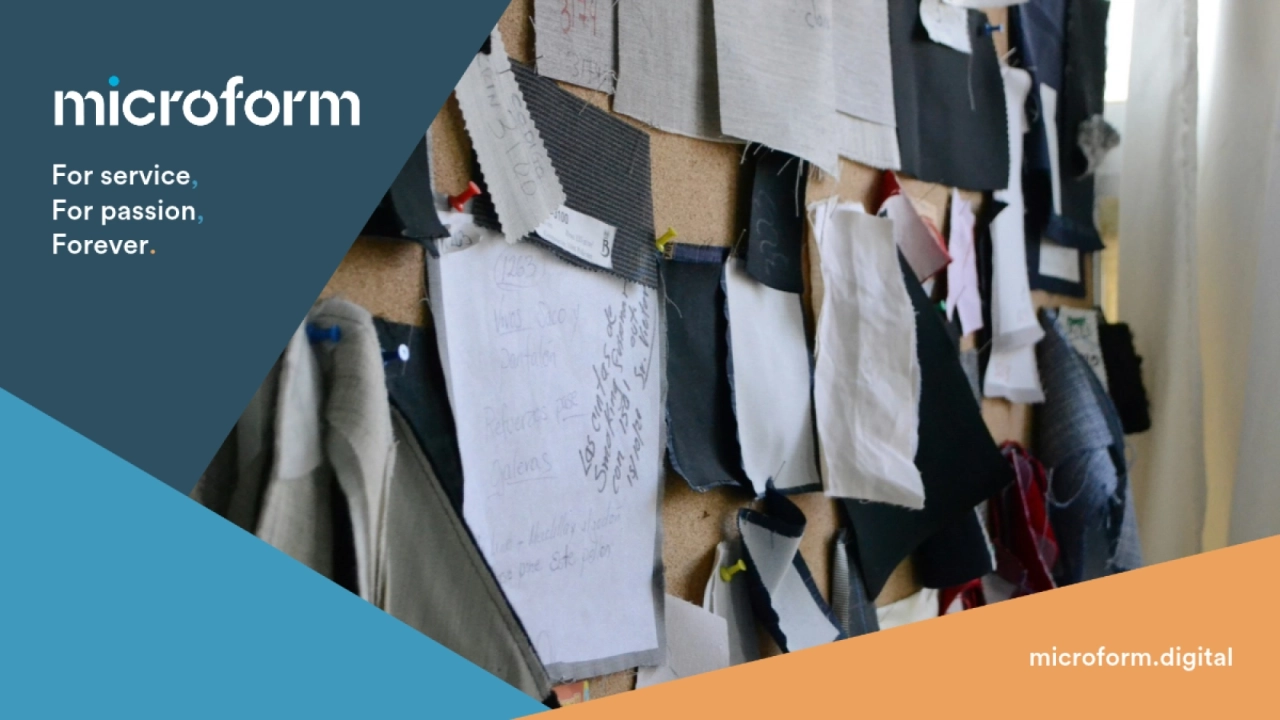
A pencilled number
Somewhere in a mill archive there is a swatch of wool check, about the size of your palm, with a pencilled number on the back. That number is the only thing linking it to the dyer, the customer and the season it was woven.
It doesn't look like much. A few square inches of cloth, slightly faded along one edge. But if you follow it back, and then forward, it tells you a great deal about how fashion and textile archives work, how they often lose their stories, and how they can end up shaping what gets made next.
So let's follow it!
Made: one swatch, many records
Let's say our check was woven in the 1960s. When it came off the loom, it didn't exist on its own. It was one small part of a much bigger paper trail.
A designer drew up the pattern on point paper. The dye house kept a recipe for each colour. The swatch was cut and pasted into a sample book, numbered, and shown to buyers. A tailoring house placed an order, which went into the order book. The finished cloth appeared in a menswear catalogue the following autumn, and a letter from the customer asked whether the green could be a shade deeper next time.
Each of those records holds a piece of the story. Together, they tell you who designed the cloth, what it was made from, how it was coloured, who bought it and how it was worn. That is design knowledge, craft knowledge and manufacturing history all in one place, and the swatch is the key that connects them.
Separated: how the story comes loose
Then life happens. The mill moves premises. The sample books go one way and the order books another. The dye recipes stay in a filing cabinet in the old office. The catalogue ends up in a box of marketing material, and the letter is filed under the customer's name rather than the cloth's.
Nobody throws anything away. But the connections between things start to fade, and that is where the real risk lies for fashion and textile collections.
A swatch without its maker, date, fibre, dye or collection is much harder to understand, and much harder to use. A garment without its supporting records may still be beautiful, but you can't say with confidence where it came from, when it was made or what it meant at the time. The object survives. The knowledge around it slowly doesn't.
Forgotten: forty years in a box
Fast forward a few decades and our swatch is in a box on a high shelf, in a sample book with a cracked spine. The people who knew what the numbers meant have retired.
This is a familiar picture across the sector, and it isn't only mills. Fashion and textile material is held by designers, heritage brands, retailers, museums, universities, theatre and costume departments, trade associations, private collectors and family businesses. In almost every case, it is spread out: rails in a studio, a sample room nobody quite owns, a storage unit across town, old catalogues in a cupboard, and folders of born-digital design files that only open on software nobody uses any more.
Much of it is physical, delicate and hard to search. If your team can't see what exists, they can't use it. Designs that could be reissued stay hidden. Questions about past production go unanswered. And every time someone does go looking, fragile pieces get handled, unfolded and moved again.
Found: putting the pieces back together
One day, someone opens the box. Perhaps it's an anniversary coming up, or a new creative director asking what the company used to make. The sample book comes down from the shelf, and the work of reconnecting begins.
This is where careful digitisation earns its keep. Capturing the swatch at high resolution, with colour and texture recorded as faithfully as possible, means people can study it on screen rather than by handling it. Capturing the back as well as the front keeps that pencilled number, and any other notes, with the image.
The real value, though, comes from what sits alongside the image. Recording the details that matter for textiles (maker, date, fibre, weave, dye, pattern number, collection) turns a picture into a record. Linking that record to the scanned order book entry, the catalogue page and the customer's letter puts the story back together. Suddenly, the swatch is something you can find, date and explain.
It also lets you be thoughtful about who sees what. Not everything in a fashion archive should be open to everyone. Unreleased designs, commercial records and material with third-party rights can be managed with the right level of access, while the rest is made easy to share.
Revived: back on the loom
Here's where the swatch stops being history and starts being useful.
The design team spots it while browsing the digitised sample books and loves it. Because the dye recipe has been found and linked, they can match the original colours, or knowingly change them. Because the order book shows which tailoring house bought it, the marketing team has a story to tell. Because the dated design records exist, the brand has clear evidence of its own work if a lookalike appears. A reissue goes into the next autumn range, labelled with the year it was first woven.
One swatch, followed properly, supports a surprising amount:
Product development: retro ranges, reissues and fresh inspiration from designs that have already proven themselves.
Brand storytelling: anniversary campaigns, collaborations and heritage content grounded in real records.
Provenance and IP: dated evidence for design rights, licensing and commercial reuse.
Sustainability: fibre and finishing information that supports repair, reuse and material research.
Exhibitions and education: well-documented pieces that curators, writers and students can actually work with.
In an industry where trends come round again and again, your own archive can be one of the most original sources of what comes next.
Every archive is full of swatches
Our wool check is made up, but its story isn't unusual. Every fashion and textile collection is full of things like it: garments, sketches, technical drawings, lookbooks, press cuttings, labels, ledgers, photographs, films and oral histories, each with a thread running back to the people and places that made it.
The aim isn't to freeze those things behind glass. It's to look after them properly, keep them connected, and make them easy enough to find that your team actually uses them.
At Microform, we help brands, manufacturers and institutions do exactly that. We digitise fragile and varied material with care, capture the details that make it meaningful, and help you organise it so the right people can find the right thing, whether that's for a new collection, an exhibition or a question nobody has thought to ask yet.
If you have a box on a high shelf you've been meaning to open, we'd love to hear about it. Get in touch to talk through your collection.