How to Build a Digitisation Business Case for Your Institution
Turning a preservation priority into a funded project
You already know digitisation matters. You've seen the fragile manuscripts, the degrading photographs, the collections that researchers struggle to access from outside your building. The challenge isn't recognising the need. It's convincing the people who hold the budget.
Building a compelling business case doesn't require a finance degree. It requires translating what you know about your collections into language that resonates with decision-makers: risk, value, return, and impact. Here's how to do it.
Start With the Problem, Not the Solution
Before you propose anything, define what's at stake. Budget holders respond to problems more readily than they respond to opportunities, so lead with the risks of not digitising.
Consider framing your opening around:
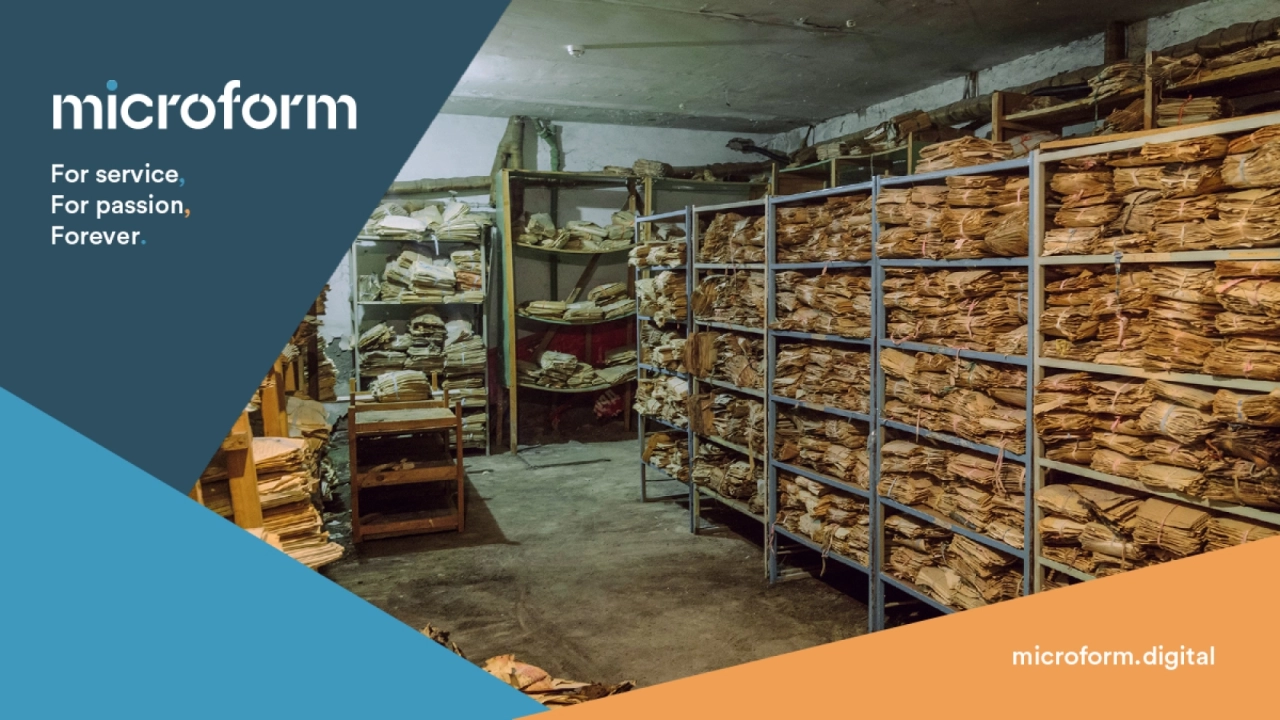
Physical deterioration. Paper, film, and photographic materials degrade over time. Acid decay, humidity fluctuations, pest infestations, and light exposure cause irreversible damage. Once lost, these materials cannot be recreated.
Access limitations. Collections locked behind physical access restrict researchers, educators, and the public, many of whom cannot travel to your institution.
Operational risk. A single flood, fire, or pest infestation could destroy irreplaceable items. Without a digital backup, there is no recovery.
This framing shifts the conversation from "we'd like to modernise" to "here is what we stand to lose" - the long-term preservation, protection, and accessibility of the collection.
Define the Scope of Your Collection
Decision-makers need specifics. A vague reference to "a large number of materials” is unlikely to carry much weight. Before submitting your business case, conduct an audit, even a rough one, that covers:
Total volume of materials (number of items, linear metres of shelving, and estimated page count)
Condition assessment: what proportion is fragile or at risk?
Current access method: are items in open access, restricted storage, or off-site?
Existing digital provision: what, if anything, has already been digitised?
This baseline does two things. It demonstrates that you've done your groundwork, and it allows you to prioritise. You don't need to digitise everything at once, and making that clear often makes a project feel more achievable to those approving it.
Articulate the Value
Once you've established the risks, make the positive case. Digitisation supports and delivers measurable value across several dimensions that resonate well with institutional priorities.
Public and academic access. Digital collections can be accessed from anywhere, at any time. For institutions with a remit to serve researchers, students, or the wider public, this directly advances your mission. Quantify where you can: how many remote access requests do you currently turn away or struggle to fulfil?
Discoverability and engagement. Enhanced metadata and online cataloguing make collections far easier to search. Digital exhibitions, online reading rooms, and digital outreach initiatives attract new audiences and increase community engagement, often without requiring additional staff time once established.
Preservation longevity. A high-quality digital surrogate allows continued use of rare or fragile material to be consulted without repeated physical handling. For the most vulnerable materials, digitisation may be the only way to ensure continued, long-term access.
Profile, partnerships, and future funding. Libraries and archives that offer rich digital access are often better placed to support funding applications, research partnerships, exhibitions, teaching, and public engagement.
Address the Practical Questions
Your budget holder will have practical concerns. Anticipate them.
Cost. Break the investment down rather than presenting a single figure. Project costs typically include initial digitisation, quality control, metadata creation, digital storage, and any ongoing hosting or access platform fees. Where possible, explore external funding. Heritage Lottery Fund grants, regional archive funding, and academic partnerships are all worth investigating alongside internal budget.
Timeline. Present a phased approach. Many institutions begin with their rarest, most vulnerable, or most-requested materials. This is both strategically sensible and makes the project feel manageable. A clear phase one with defined deliverables is far easier to approve than an open-ended programme.
Partners and expertise. Specialist digitisation requires specialist equipment, handling and workflows, particularly for fragile, oversized, or non-standard materials. Identify whether you'll manage the project in-house or partner with an external provider and demonstrate that you've considered the quality and security of whichever approach you propose.
Put It All Together
A strong business case for digitisation doesn't need to be lengthy. A clear, well-structured document covering the following will serve you well:
The problem: risks to collections and current access limitations
The proposed solution: scope, phasing, and approach
The benefits: accessibility, preservation, engagement, and institutional value
The costs: broken down and, where possible, offset by funding opportunities
The ask: a specific budget figure, timeline, and decision point
Keep the language clear and accessible. Avoid unnecessary technical jargon where possible and, where specialist terminology is needed, explain it briefly and plainly.
The strongest business cases are written by the people who genuinely understand and care about their collections, which means you're already better placed than you might think. Your expertise is an asset: your knowledge of the material, its risks, and its value is one of the most important parts of the process. The task is simply to translate it into a format that speaks to institutional priorities.
If you're at the start of your digitisation journey and would like to talk through what a project might involve, the team at Microform would be glad to help. With 70 years of experience working with libraries and archives across the UK, we can offer practical guidance with no obligation.