When the Story Behind the Record Gets Lost
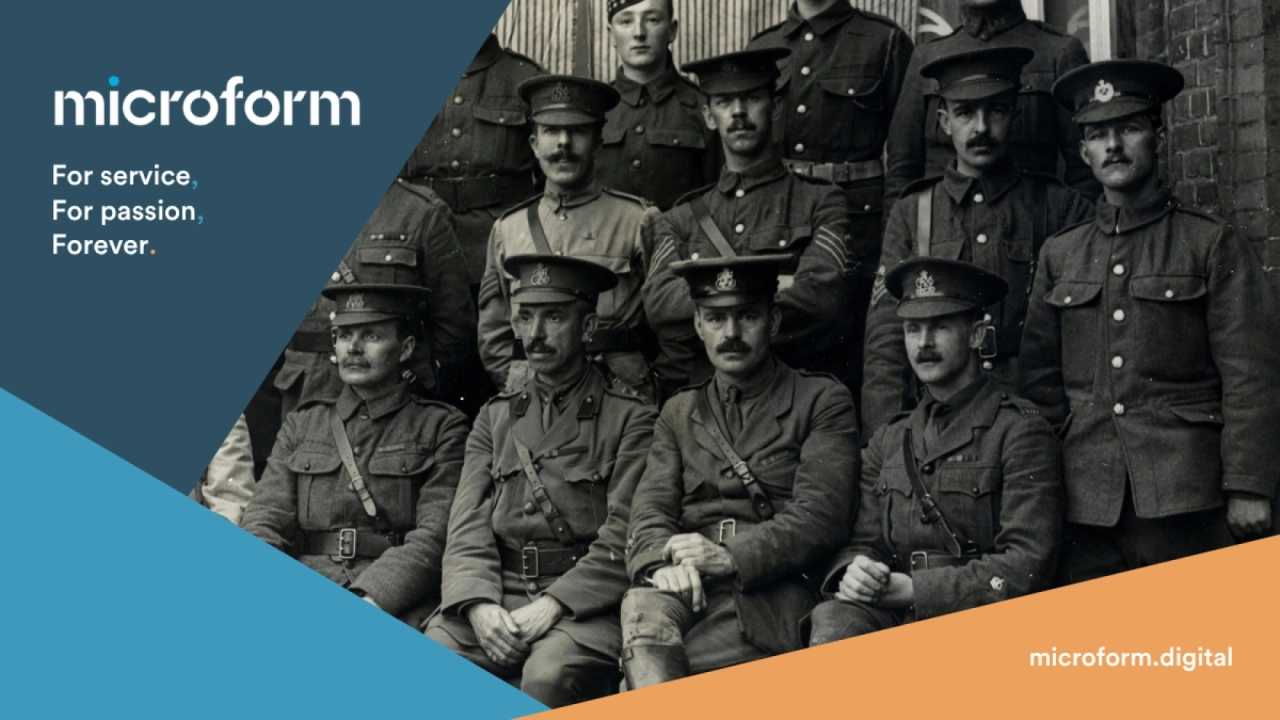
A photograph turns up in a regimental museum's store cupboard: a young soldier, uniform correct to the last button, standing somewhere that might be Egypt or might be Italy. No name on the back. No date. No unit. The print itself is in perfect condition, sharp, unfaded, undamaged. And yet the thing it was actually for has already slipped away.
In our experience, there's a risk to military and regimental archives that's just as serious as fire, flood, damp or pests, but far easier to miss. Even a record that's been properly protected from all of those threats, kept dry, stable and safe from pests, can still fail at the one job it had: connecting a name to a face, a face to a unit, a unit to a place and a date. Once that thread is cut, the object doesn't disappear. It just stops being able to tell anyone anything.
Why context is the fragile part
Most heritage collections are held together by their content. Military collections are held together by their connections. A photograph without a name is a curiosity. A diary without the context of where and when it was written is hard to place in any meaningful story. A roll of honour without the service records behind each name is a list of the people we’ve lost with no way of knowing who any of them were. The paper survives; the meaning depends on everything around it staying attached.
That's what makes these collections so easy to under-protect, and so easy to feel a quiet, ongoing worry about. A conservator can keep a letter dry and stable for decades. But nothing about keeping it dry stops the handwritten note that used to sit beside it, the one that said, "this is Private Hargreaves, taken just before he left for France," from being misfiled, thrown out during an office move, or simply outliving the one person who remembered which box it belonged in.
Collections that don't look like each other
Military heritage material doesn't sit in one type of institution, which is part of what makes it hard to look after well. It's held by regiments, veterans' associations, museums, local history societies, councils, schools, charities, individual families and private collectors, often without any of them knowing what the others hold. And it rarely takes one form. A single collection might include:
Service records, medal documentation and unit histories
Photographs, diaries and personal letters
Rolls of honour and logbooks
Maps, plans and operational papers
Newspapers, newsletters and scrapbooks
Oral histories, audio recordings and film
Objects, and increasingly, born-digital files
Fragile formats are part of the challenge, but caring for them is about more than keeping each item physically safe. It's about keeping the story, the evidence and the surrounding context intact together, so that in twenty years, the photograph still has its name, and the name still has its story.
The questions this actually raises
For anyone holding this kind of collection, we find the practical worries tend to come down to four things.
How do we know what we actually hold? Many custodians have never had the chance to properly survey their own collection. Before anything can be looked after well, it has to be understood, catalogued and assessed, so the gaps and the connections become visible rather than guessed at.
How do we keep names, units, dates and photographs linked? This is the heart of it. Digitising the material only protects the story if it's done with those connections in mind, linking a scanned photograph to the service record it belongs with, rather than treating each item as a standalone file.
How do we make this useful to the people who actually need it? Family historians, researchers, regimental associations and schools all want to use these collections, but they can only do that if the material is searchable and organised, not just digitally present.
How do we open this up without compromising sensitivity or privacy? Military records often involve personal details, family circumstances or content that needs careful handling: casualty information, medical records, or material relating to people who may still be living. Wider access has to be balanced with real judgement about what should be shared, with whom, and how.
What happens when someone asks to see it
Most military archives already know this scene well. A research enquiry arrives, perhaps a family historian looking for a grandfather's service record, a regimental association helping with an anniversary, a student working on a local history project. Someone has to find the answer: checking an index, retrieving the right volume or box, locating the specific page, photographing or copying it, and returning everything safely to where it came from. Some archives charge a small fee for this. Some digitise the material at the point of request. Others don't have the facilities to digitise at all, and the only option is to retrieve the physical item and arrange a date for the requester to visit the reading room in person.
Whichever way it's handled, there's a cost in staff time that doesn't always show up anywhere, and it tends to repeat itself. When a second enquiry arrives about the same soldier, the same unit or the same photograph, much of that work happens all over again.
A well organised digital collection changes that. The effort spent answering the first enquiry can go on serving every enquiry that follows: an existing scan can be found and shared in minutes rather than retrieved and photographed from scratch, which frees up time to help someone interpret what they've found rather than just locating it for them. Every useful digital copy becomes something you can draw on again and again, not a one-off piece of work tied to a single request.
It's also a bigger opportunity than it might first appear. For the museums, associations and organisations caring for military collections, digitisation can help the archive reach people well beyond the reading room, supporting research, education and remembrance for anyone who has reason to ask, wherever they happen to be.
Preserving the whole story, not just the object
None of this is really about scanning equipment. It's about treating a collection as a living, connected story rather than a pile of individual items, so that a regiment's archive still makes sense to the volunteer who inherits it in ten years, and a family's box of letters still means something to a grandchild who never knew the person who wrote them.
This is the care we try to bring to military and regimental collections: understanding what's held, protecting what's fragile and, most importantly, keeping the connections between names, places, dates and stories intact. Whether you're preparing for a regimental anniversary, an exhibition, a commemoration, want the next research enquiry to take less time than the last one, or simply want to know what's really in the archive before it's too late to ask, that's where the conversation should start.
Get in touch and talk us through your collection, especially if there's an anniversary, exhibition or commemoration on the horizon, or a steady stream of research enquiries that keeps landing on the same desk.