Your Business Has a History. Is It Safe?
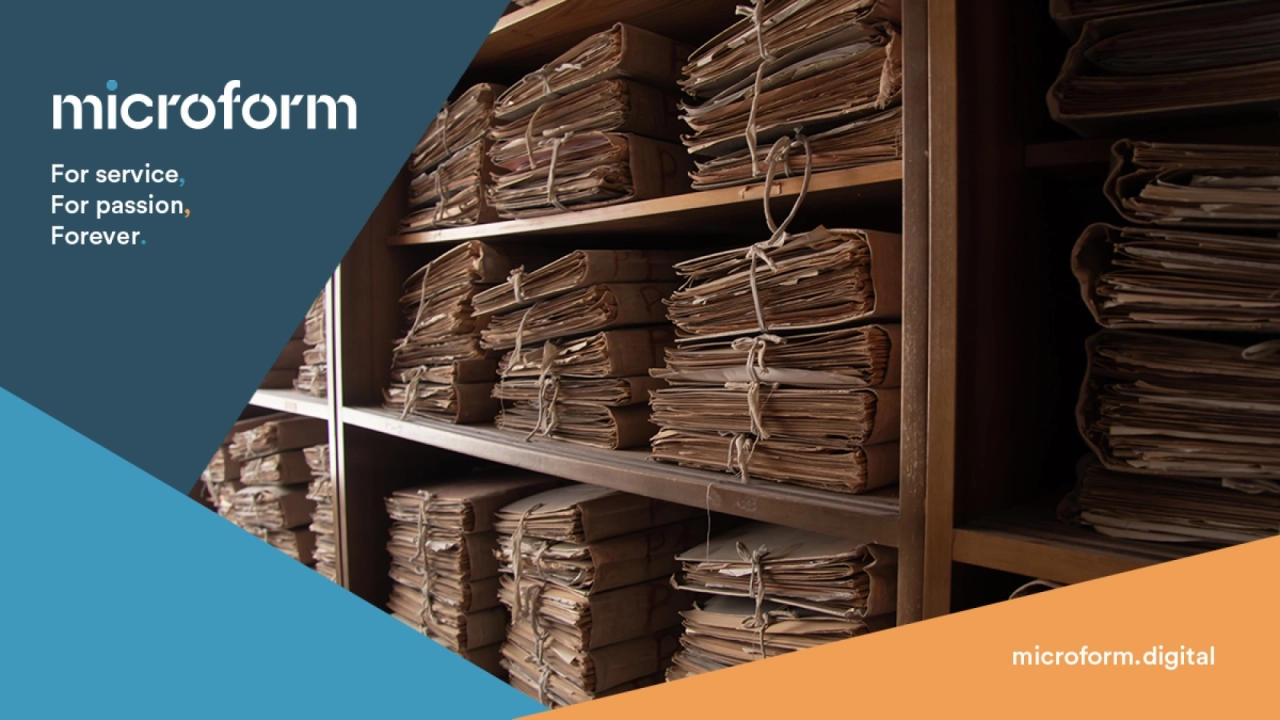
Most businesses know they have an archive. Somewhere. A room, a cupboard, a basement, an off-site storage unit, a shared drive that nobody has opened in years. Boxes that have moved between offices. Files that were digitised at some point but never properly organised. Photographs that someone labelled, and plenty that nobody did.
For much of the time, that is fine. The archive sits quietly, and life goes on.
Then something happens.
The legal team needs evidence of a trademark going back thirty years. A marketing department is planning an anniversary campaign and wants original photography. A long-serving member of staff announces their retirement, and it becomes clear that they are the only person who knows where anything is. A building is sold and due diligence requires documentation that should exist, but nobody can put their hands on it.
Suddenly, the archive matters. And suddenly, the question is not just "where is it?" but "is it still there, and can we still use it?"
The problem with leaving it for later
Archives are easy to deprioritise. They do not demand attention in the way that a client deadline or a budget meeting does. And the material itself is often resilient enough, in the short term, to survive neglect.
But the risks accumulate in the background.
Paper deteriorates. Photographs fade. Film, audio and video formats become obsolete. Digital files get stranded in old systems, unsupported formats or shared drives that nobody manages. Physical collections are vulnerable to damp, pests, unsuitable storage and the disruption of office moves.
There is also a subtler risk. Over time, the knowledge of what an archive contains, where things are and what they mean becomes concentrated in fewer and fewer people. When those people leave, that knowledge can leave with them. The boxes remain, but the context that makes them useful can be much harder to recover.
This is not a problem that announces itself. It tends to reveal itself at the worst possible moment.
What businesses are often sitting on
It is worth being clear about what a business archive can actually contain, because organisations often underestimate the range and value of what they hold.
Beyond the obvious: board minutes, annual reports and financial records, a business archive might include product drawings and specifications, brand and packaging designs, staff magazines and internal communications, photographs of people, places, buildings and events, correspondence with customers, suppliers and partners, press cuttings, advertising materials and catalogues, and records of sites, properties and operations that no longer exist in their original form.
Each of these can serve a practical purpose. Brand and design teams can use historic material to inform and authenticate campaigns. Legal and compliance teams may need records to support evidence, protect trademarks or respond to claims. Leadership teams can use the archive to understand how past decisions were made and how the business has changed. And for organisations marking a significant milestone, authentic historic material is often far more powerful than anything that can be created from scratch.
The value is not always obvious until it is needed. But when it is needed, the difference between having the right record and not having it can be significant.
A good time to ask some questions
You do not need a fully catalogued, professionally managed archive to begin making progress. Many businesses start from a position of uncertainty: a collection that has never been properly reviewed, material in mixed formats and locations, and no clear picture of what exists or what condition it is in.
That is a perfectly normal starting point. The important thing is to begin asking the right questions before a moment of need forces the issue.
What does the organisation actually hold, and where is it? What is at risk, either from physical deterioration or from the departure of the people who understand it? What would the business need its archive to do, and is it currently in a position to do that?
A structured archive review can help answer these questions and identify the most practical next steps, whether that is digitisation to protect fragile material, cataloguing to make the collection searchable, or a more straightforward process of understanding what exists before deciding what to do with it.
From stored records to something useful
The goal is not an archive for its own sake. It is an archive that the business can actually use: one that can be searched, shared and relied upon when it matters.
That might mean digitised images available to marketing teams. Structured catalogue data that makes it possible to find the right record quickly. A searchable collection that does not depend on one person's memory. Or simply the confidence that comes from knowing what the organisation holds and that it is being looked after properly.
We are currently working with a number of businesses on exactly this kind of project, helping them understand what they have, protect what matters and make their collections genuinely useful. We will be sharing more about one of those projects shortly.
A question worth asking now
Business archives tend to become urgent at the least convenient moments. The organisations that are best placed to respond are the ones that have already asked the question: what do we have, and is it safe?
If you are not sure of the answer, it is probably worth finding out.
Microform works with businesses at every stage of the archive journey, from initial reviews and preservation advice through to digitisation, cataloguing and access solutions. Get in touch to find out how we can help.